If you've asked a few cash buyers what they'd pay for your house, you've probably noticed two things. The offers are lower than what Zillow or your neighbor's sale suggests, and they're often far apart from each other. Neither of those is random. A legitimate cash offer comes from a fairly simple piece of math, and once you understand it, you can tell a fair offer from a lowball and decide whether a cash sale makes sense for you at all.
This post walks through that math in plain terms. It's general, and every house is different. A good local agent and a contractor you trust are the best people to check our numbers or anyone else's.
The Basic Formula
Almost every investor who buys houses for cash works backward from the same starting point:
What the house will be worth after it's fixed up, minus what it costs to fix it, minus what it costs to own it and resell it, minus a profit margin for the risk, equals the offer.
That's it. The differences between buyers come from how honestly and accurately they fill in each of those lines.
Step One: What the House Is Worth After Repairs
Investors call this the after repair value. It's what the house would likely sell for on the open market once it's updated, based on recent sales of similar houses nearby. Similar means close in size, age, bedrooms, bathrooms, style, and condition, ideally in the same neighborhood and sold within the last few months.
This is the line where a lot of confusion starts. Online estimates often assume your house is in average or better condition. If your kitchen is original, the roof is near the end of its life, and the basement takes water every spring, the after repair value isn't what your house is worth today. It's what it could be worth after someone spends real money on it.
Step Two: The Repair Budget
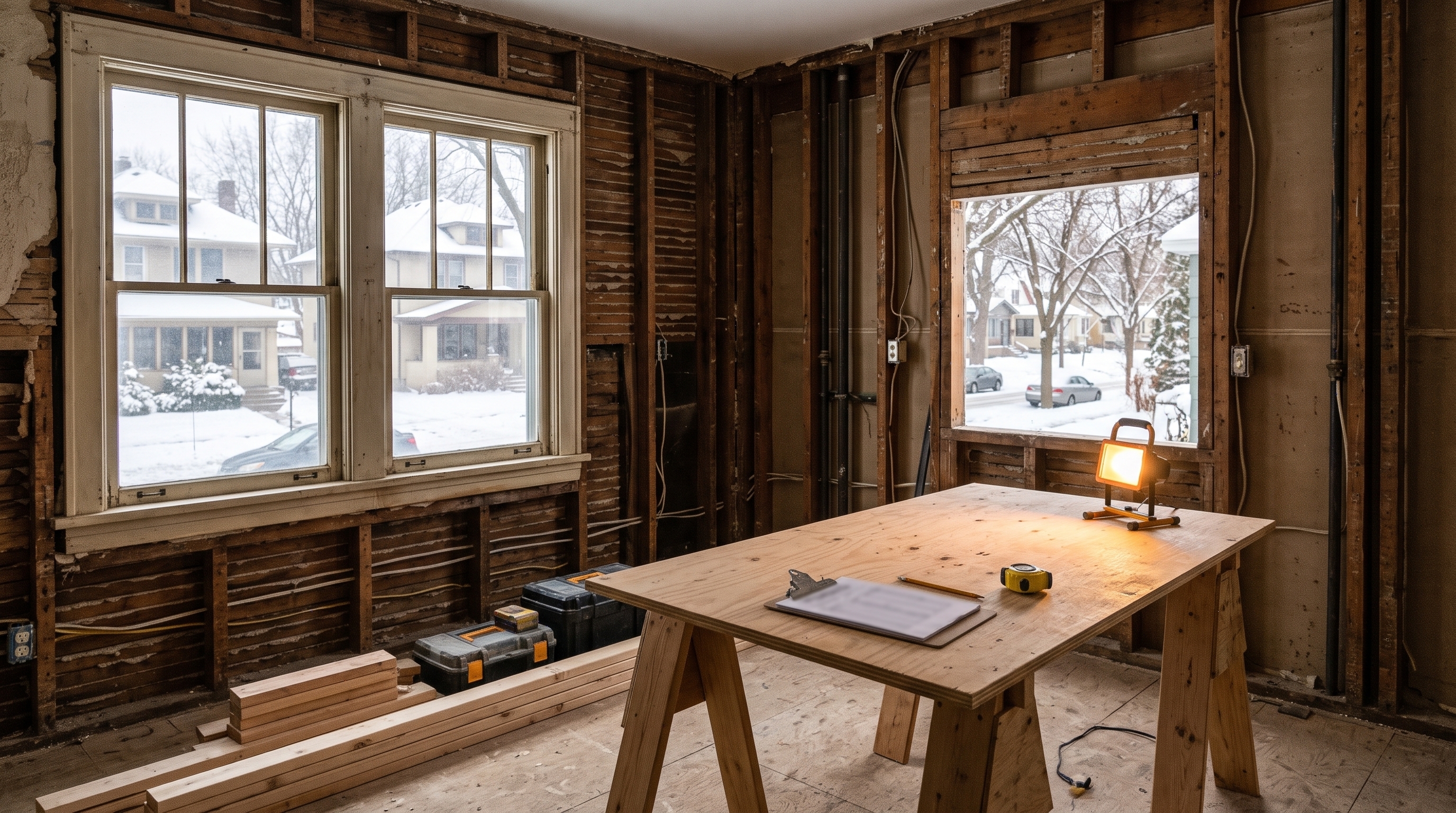
Next comes an estimate of everything it takes to bring the house up to the level of those comparable sales. In the Twin Cities, that list often includes things buyers in newer markets rarely see: old stone or block foundations, original electrical, aging sewer lines running to the street, galvanized plumbing, lead paint in older homes, and attics with little insulation. Our post on selling a house with foundation problems shows how fast one of those items can grow.
Minneapolis, St. Paul, and several suburbs also require a point of sale evaluation before a house is sold, and the report can come with a list of required repairs. A cash buyer has to plan for those too.
Investors also pad the repair budget, because they've opened enough walls to know there's usually something behind them. That padding is legitimate. A buyer who doesn't build any in is more likely to come back later asking for a lower price.
Step Three: The Costs Most Sellers Don't See
This is the part of the math that surprises people most. A buyer who fixes and resells your house pays a long list of costs between buying it and selling it again:
Buying costs. Title work, closing fees, and recording.
Holding costs. Property taxes, insurance (which costs more on a vacant house under renovation), utilities, and heat all winter. Most investors also borrow money or tie up their own, and that capital has a cost every month the project runs.
Resale costs. Real estate commissions, seller closing costs, and often concessions to the next buyer. Our post on what it really costs to sell with a Realtor breaks those down line by line. The investor pays all of them on the way out.
Time. A typical renovation and resale can take several months. When homes take longer to sell, as they do in a Twin Cities winter and in a market with more homes for sale than in years, every one of those monthly costs runs longer.
Step Four: The Profit and the Risk
Finally, the buyer has to make enough to justify the risk. Renovations run over budget. Markets shift. A house can sit. If a buyer can't make a reasonable return after all of that, there's no reason to do the project. That margin is real, and any cash buyer who tells you they don't make money on your house isn't being straight with you.
A Worked Example
Here's an illustration with round, made up numbers for a hypothetical older house in the metro. These are not quotes and not our formula for your house. They just show how the lines stack up.
After repair value: $325,000
Repairs, including a cushion: minus $55,000
Resale costs (commissions, closing costs, concessions): minus $22,000
Holding costs over about five months (taxes, insurance, utilities, financing): minus $15,000
Buying costs: minus $3,000
Profit and risk margin: minus $35,000
Cash offer: about $195,000
That number looks low next to $325,000. But $325,000 was never your number. Your house isn't fixed up, and if you listed it as is, you would sell to a buyer pricing in the same repairs, and then you'd pay your own commissions, closing costs, and carrying costs on top of that.
Why Offers From Different Buyers Are So Far Apart
Different repair estimates. One buyer walked the house carefully. Another guessed from photos.
Different plans. A buyer who plans to keep it as a rental runs different math than one who plans to flip it.
Different costs of money. Buyers paying expensive short term loans need a bigger spread.
The bait and switch. This is the one to watch. Some buyers put a high number on paper to win the contract, then use the inspection period to find "problems" and cut the price right before closing, when you've already planned your move. A slightly lower offer that holds firm is usually worth more than a high one that doesn't.
How to Tell if a Cash Offer Is Fair
Ask them to show the math. A legitimate buyer can tell you roughly what they think the house is worth fixed up and what they think it needs. If they won't, that tells you something.
Get your own numbers. Ask a local agent for recent comparable sales, and get a rough repair estimate from a contractor if the house needs significant work.
Compare your net, not the price. Find out who pays closing costs, whether there's an inspection contingency, how much earnest money they'll put down, and whether the price can change after you sign.
Insist on a title company. A legitimate cash sale closes through a licensed title company, and you get a settlement statement showing exactly what you receive.
When a Cash Offer Isn't the Right Call
If your house is updated, in good shape, and you have time, listing it will almost always net you more, even after commissions and carrying costs. We'll tell you that directly. A cash sale makes the most sense when the house needs real work, when the timeline matters, or when certainty is worth more to you than squeezing out every last dollar.
Want to see the math on your house? Homefield Homebuyers buys Twin Cities houses as is. We'll walk through our numbers with you line by line, show you how we got there, and give you a firm offer that doesn't get renegotiated at the last minute. Contact us for a no obligation offer. Visit HomefieldHomebuyers.com and fill out our contact form or send us an email at Sales@homefieldhomebuyers.com to get started.
This article is general information only. It is not legal, tax, financial, or appraisal advice. The example above uses hypothetical numbers for illustration only and does not reflect the value of any actual property or the terms of any offer. Property values, repair costs, closing costs, point of sale requirements, and market conditions vary by property, by city, and over time, and the descriptions above are simplified. Get your own comparable sales from a licensed agent and repair estimates from qualified contractors, and talk with a licensed Minnesota attorney or tax professional about your specific situation before making any decision about your property.

Comments