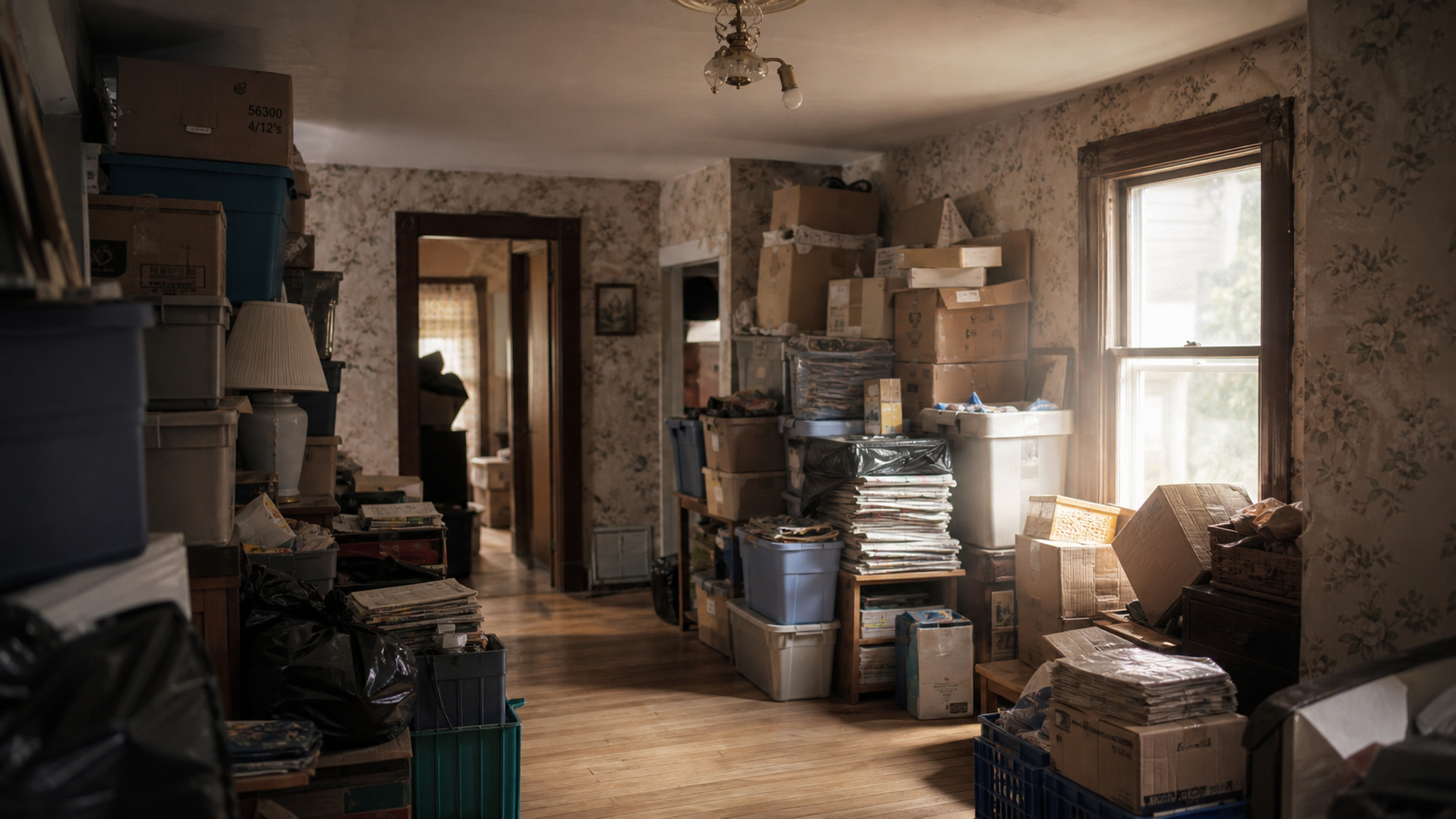
Nobody opens the front door of a hoarded house and knows where to start. Maybe it was a parent's house, and the rooms you grew up in are now narrow paths between stacks. Maybe it was a rental, and the tenant left behind years of belongings and a smell that hits you on the porch. Maybe it is your own house, and you have been trying to get ahead of it for longer than you want to admit. However you got here, you are looking at a property with real value underneath and no obvious way to reach it.
Here is the good news. Hoarder houses sell in the Twin Cities every week. The real question is which route costs you the least time, money, and grief. Your city and county are the authorities on what applies to your specific property, so treat what follows as orientation and confirm the details with them.
Why the Normal Listing Route Stalls
A traditional sale depends on three things a hoarded house usually cannot deliver.
Showings. Most retail buyers cannot see past the contents, and many agents will not list the house until it is emptied. That puts the entire cleanout on your calendar and your credit card before anyone makes an offer.
Financing. Most buyers use a mortgage, and the lender sends an appraiser who needs to see the floors, walls, mechanicals, and roof. Government backed loans come with minimum property standards around health and safety. If the appraiser cannot see it, or does not like what they see, the loan stalls or dies, usually after you have already taken the house off the market.
Inspections. A buyer's inspector will flag every area they could not reach, and the buyer's agent will tell them to assume the worst. Often the worst is accurate. Years of weight on floors, roof leaks hidden behind stacked boxes, plumbing that quit and was never repaired, pests, and moisture damage are common once a house is cleared.
The City May Already Be Involved
In the Twin Cities, the city often has a say before you ever reach a buyer.
Point of sale evaluations. Minneapolis, St. Paul, and a number of suburbs require a truth in housing or point of sale evaluation before a house is listed or sold. The evaluator needs access to do the job. Any required repairs that come out of it either get done by the seller or get formally taken on by the buyer, with the city tracking them. A packed house can make this step slow, incomplete, or expensive.
Condemnation. Cities can condemn a house for unsanitary conditions, rodents, fire hazards, blocked exits, or utilities that have been shut off. A condemned house gets posted, has to be vacated, and cannot be lived in again until the problems are corrected and the city signs off. In Minneapolis, a condemned property often lands in the vacant building program as well, which brings annual fees and a much narrower pool of buyers. We covered that program in last week's post on vacant houses.
If city letters are buried in the mail, open them now and call your city's inspections department. When an order is already open, time matters.
Before You Throw Anything Away
The instinct is to rent the biggest dumpster available and start pitching. Give it one week first.
Find the paperwork. Hoarded houses hide important documents: a will, the deed, vehicle titles, life insurance policies, bank and retirement statements, stock certificates, savings bonds. Cash and jewelry turn up in coat pockets, books, and freezers. Go through paper before anything leaves the house.
Open the mail. Unopened envelopes tell you what the house owes. Property tax statements, utility shutoff notices, mortgage letters, and city notices all change your timeline. A house that is behind on taxes or headed toward foreclosure has a clock running whether anyone opened the envelope or not.
Confirm who has authority. If the owner has passed away, the person with legal authority over the estate decides what gets kept, sold, or discarded, and in many cases that authority has to be established through the court before the house can be sold at all. One sibling clearing out the house on a Saturday without the others is how family fights start. Get agreement in writing and talk to a probate attorney.
When Someone Still Lives There
If the owner is still in the house, the house is the second problem. Hoarding disorder is a recognized mental health condition, and cleanouts done to someone rather than with them tend to fail. The house refills and the relationship takes the damage. The Minnesota Hoarding Task Force maintains lists of support groups, therapists, and professional organizers who specialize in this, and it is a better first call than a junk hauler.
What the Cleanout Really Takes
Families budget a weekend. Real cleanouts take weeks, sometimes months, when the work happens on evenings and weekends.
A professional crew is faster, but the bill climbs with the volume and the condition. Pet waste, rodents, spoiled food, and mold push the job into biohazard territory, which means specialized cleaners, protective equipment, and a price that surprises most people. Some cities require a permit to keep a dumpster on the street. None of that includes the repairs you will find once the floors are visible.
Get at least two written bids, and ask what counts as hazardous.
Your Three Realistic Options
Clean it, fix it, and list it. The highest gross price (probably), and the right answer when the house is structurally sound, you have the cash and the time, and nobody is carrying a mortgage payment on it. Run the whole number first: cleanout, repairs, months of taxes, insurance, and utilities, point of sale repairs, and commissions at closing. Every dollar goes out before any comes in.
Pull the valuables and sell the rest as is. Take the paperwork, the keepsakes, and anything of real value, then sell the house with everything else still inside. You skip the heavy cleanout and the repairs. The buyer pool shrinks to investors, and the price reflects that.
Sell it exactly as it sits. No cleanout, no repairs, no showings, no lender, no appraiser. A cash buyer takes the contents, the condition, and the city paperwork, and you pick the closing date. We will be straight with you: a cash offer on a hoarded house is below what the same house brings after it has been emptied and repaired. What you get for the difference is certainty and your time back. Subtract the cleanout, the repairs nobody can see yet, the carrying costs, and the commissions, and the gap is usually much smaller than people expect.
Have a Twin Cities hoarder house you want off your plate? Homefield Homebuyers buys houses as is, full of contents, in any condition, including houses with open city orders. You take what matters to you and leave the rest. Call us or contact us today. There is no obligation and no pressure.
This article is general information only. It is not legal, tax, financial, or health advice, and it is not a substitute for talking to a professional about your own situation. Point of sale requirements, condemnation rules, disclosure obligations, probate procedures, permits, and deadlines vary by city, by county, and by property, they change over time, and the descriptions above are simplified. Do not rely on this article for your own deadlines, obligations, or numbers. Confirm your specific situation with your city's inspections department, your county, and a licensed Minnesota attorney or real estate professional before making any decision about your property, and use qualified professionals for any hazardous cleanup.

Comments